
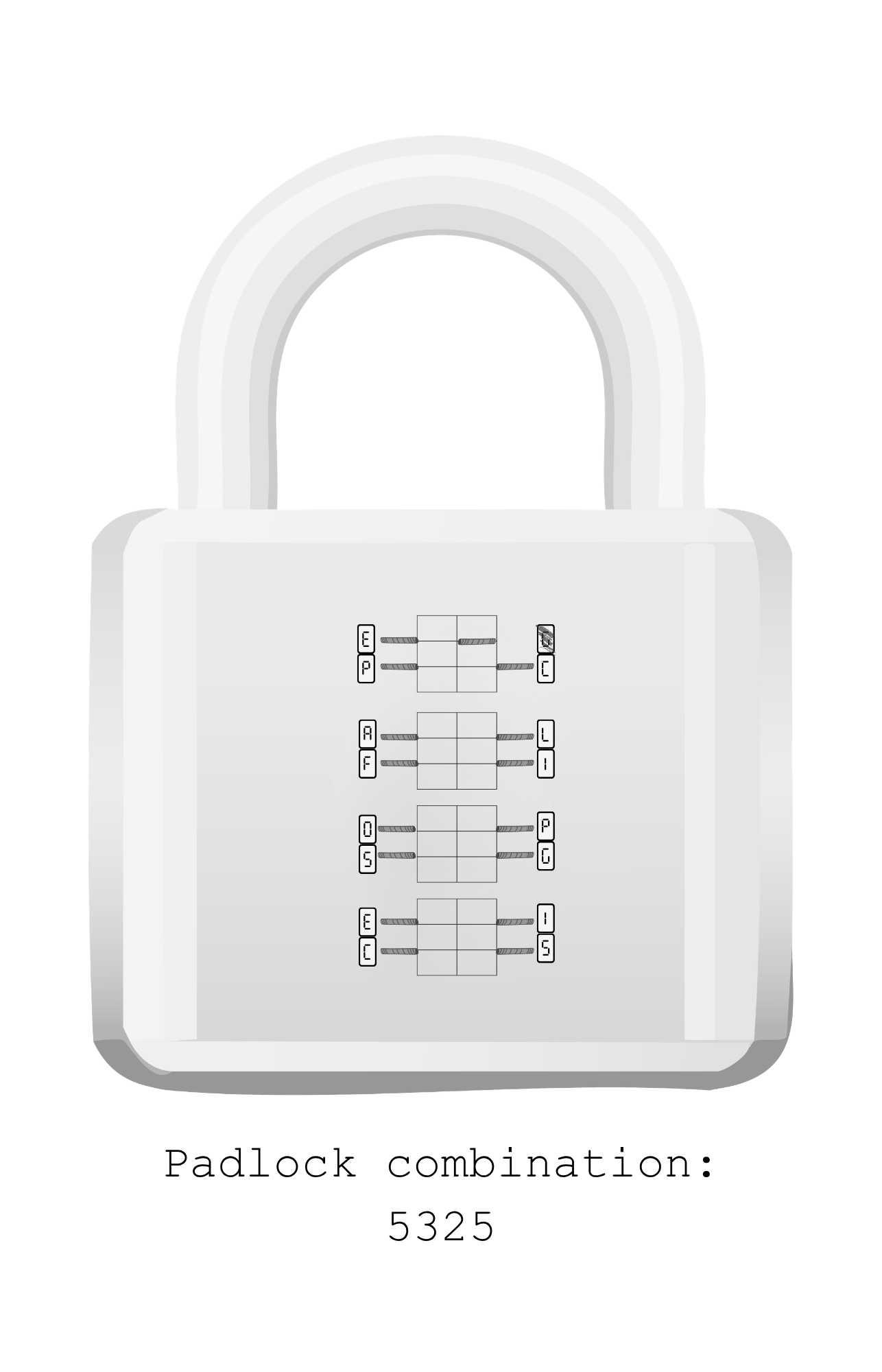
Of the fifty puzzles I’ve sent out for play-testing, there is one that consistently draws a strong reaction: The padlock puzzle! Some testers have claimed it’s their favourite puzzle, while other have claimed it’s their least favourite. After reviewing the comments, I’ve decided to rework the concept for the final version in the book - I don’t want my audience to get stuck on it and put the book down mid-adventure. However, I’m rather fond of the original version, so I’m posting it here. What do you think? Is the padlock puzzle ingenious, or irritating and ill-conceived? A fully explained solution is provided below.
Solution:
The puzzle shows four grids, each with two bars on either side. The manipulation of the top grid shows that the bars can be pushed in. thereby eliminating the associated letter. The challenge is to move in the correct bar so that the combination shows the numbers 5,3,2,5.
The five is made in the top grid. The top right bar has already been pushed in. To complete the five, you must push in the second bar on the left, eliminating the letter P.
To make the three, both bars on the left of the second grid must be pushed in.
The two is simply the reverse of the five. To make it, you must push the top left bar, and the bottom right of the third grid, elimiating O and G.
Finally, there is another five, so for the bottom grid, you must push the top right and bottom left bars, eliminating I and C.
The remaining letters provide the answer, which is Eclipses.
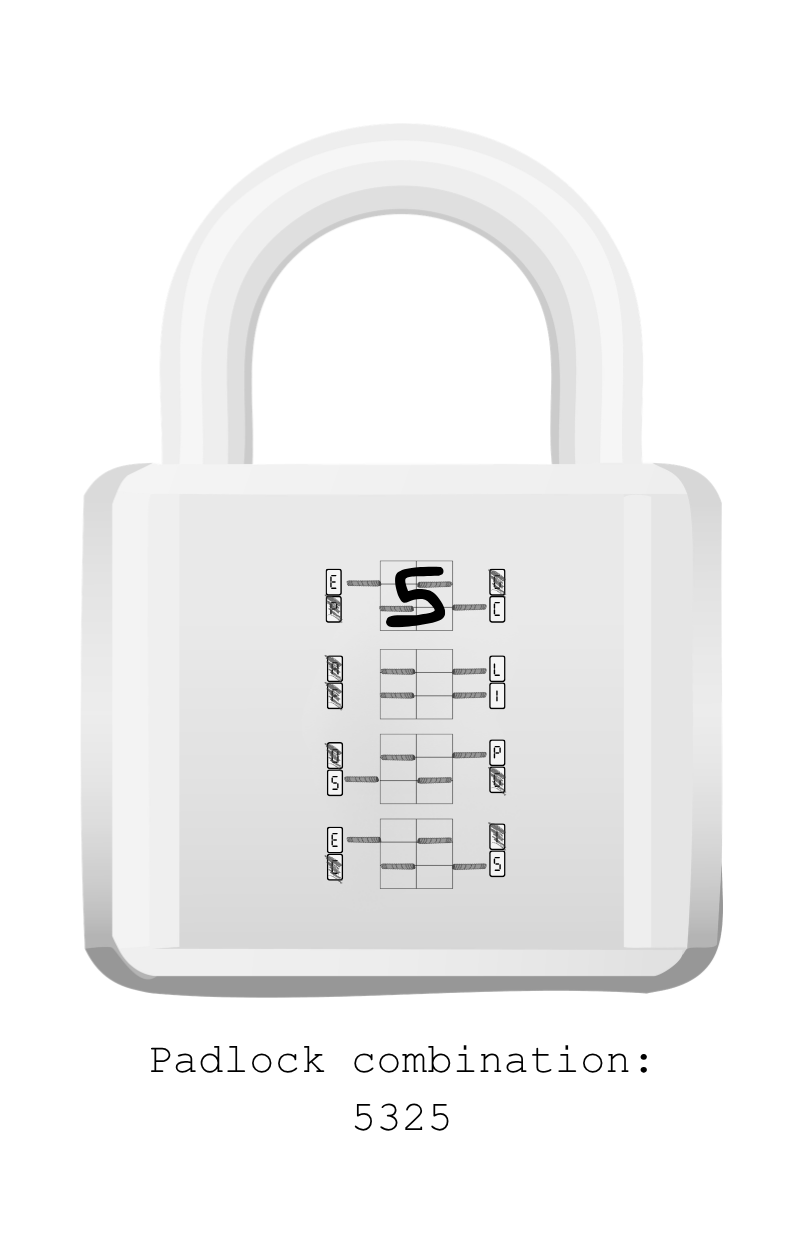
The solved puzzle.